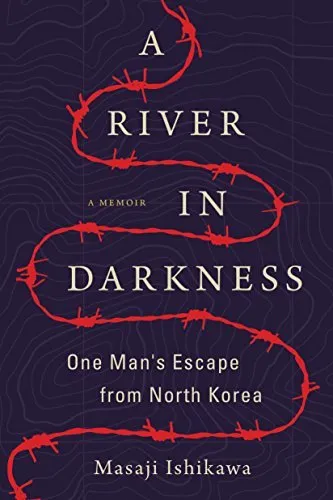
A River in Darkness: One Man's Escape from North Korea
That’s what happens to language in countries like North Korea. A totalitarian dictatorship is a “democratic republic.” Bondage is known as “emancipation.” But back to
Page: 38, Location: 574-575
That’s what happens to language in countries like North Korea. A totalitarian dictatorship is a “democratic republic.” Bondage is known as “emancipation.”
Page: 38, Location: 574-575
Looking back on it, I don’t think people even realized it was an offensive term. To them, calling Japanese people bastards was just a statement of fact. North Koreans had been indoctrinated to think that all Japanese were cruel. And to be fair, I tended to call North Koreans “natives.” Most of the returnees did the same. When we weren’t
Page: 40, Location: 602-604
Looking back on it, I don’t think people even realized it was an offensive term. To them, calling Japanese people bastards was just a statement of fact. North Koreans had been indoctrinated to think that all Japanese were cruel. And to be fair, I tended to call North Koreans “natives.” Most of the returnees did the same.
Page: 40, Location: 602-604
Once beyond school age, individuals were all expected to carry out two functions: to contribute to production and to take part in military operations. The whole system was based on the “Four Military Lines.” The key tenets were “arm the entire people,” “fortify the entire nation,” “build a nation of military leaders,” and “complete military modernization.” So various militias were formed.
Page: 41, Location: 625-628
North Koreans didn’t have anything to compare their country with because they’d never experienced anything else. Even when Kim Il-sung did something particularly brutal or horrific, no one raised an eyebrow. “Remember the time of Japanese colonial rule!” “Never forget the cruelty of American imperialism!” Without any other information at their disposal, young North Koreans simply fell for the propaganda.
Page: 43, Location: 645-648
I learned that after high school graduation in North Korea, there were three paths to choose from. Except there weren’t. In reality, your path was chosen for you. Basically, if you were clever and your birth and background were good enough, you were sent to university. If you were physically strong, you went to the military academy or became a common soldier. The rest were sent to workplaces as laborers. The most important factor in path determination was not how hard you worked but your assigned caste. The three castes were “nucleus” (or “core”), “basic” (or “wavering”), and “hostile.” Three criteria determined your caste: your birth and background, your perceived loyalty to the party, and your connections. Academic achievements had nothing to do with it, no matter how excellent they were. Your whole life was determined by which caste you’d been consigned to.
Page: 49, Location: 751-757
I knew of course that the party was hostile toward us, but I hadn’t realized until that moment that it was a deliberate policy to send Japanese people to the very bottom of society. I was stunned that this guy would openly admit such a thing.
Page: 51, Location: 777-779
Someone once said, “If a crying baby could tear down the universe, it would.” That’s how I felt that day. I wanted to demolish the whole universe, but the sad truth was, it had already come crashing down around my head.
Page: 51, Location: 780-782
This was laughable, of course, but that’s always the way with totalitarian regimes. Language gets turned on its head. Serfdom is freedom. Repression is liberation. A police state is a democratic republic. And we were “the masters of our destiny.” And if we begged to differ, we were dead.
Page: 54, Location: 821-823
In theory, if you were able-bodied, you got seven hundred grams of food a day. The elderly and sick got three hundred grams a day. That’s right. If you were sick or old, you were penalized. But the reality was even worse. The reality was “no work, no dinner.” So old people had to work until they died. They truly did.
Page: 55, Location: 842-844
There’s a saying, “Sadness and gladness follow each other.” As I see it, people who experience equal amounts of sadness and happiness in their lives must be incredibly blessed. Some people lead a painful life full of nothing but sorrow. I should know.
Page: 56, Location: 858-860
If you suffer long enough, it almost becomes funny, and you can find yourself laughing at the most miserable situations. I guess it’s a kind of hysteria. Once I woke up in the middle of the
Page: 59, Location: 905-906
If you suffer long enough, it almost becomes funny, and you can find yourself laughing at the most miserable situations. I guess it’s a kind of hysteria. Once I woke up in the middle of
Page: 59, Location: 905-906
If you suffer long enough, it almost becomes funny, and you can find yourself laughing at the most miserable situations. I guess it’s a kind of hysteria.
Page: 59, Location: 905-906
And I came to recognize that, no matter how difficult the reality, you mustn’t let yourself be beaten. You must have a strong will. You have to summon what you know is right from your innermost depths and follow it.
Page: 65, Location: 986-988
Life was just as hard, even harder than before, but my son took my mind off my mother’s death. Apart from him, I had nothing to live for. And if I thought too much about that, well, I moved toward the abyss. So I struggled desperately just to make it from one day to the next.
Page: 78, Location: 1192-1194
Let me tell you what we were taught in school in North Korea. “People in South Korea can only survive by stealing things and selling their blood.” The irony!
Page: 94, Location: 1433-1434